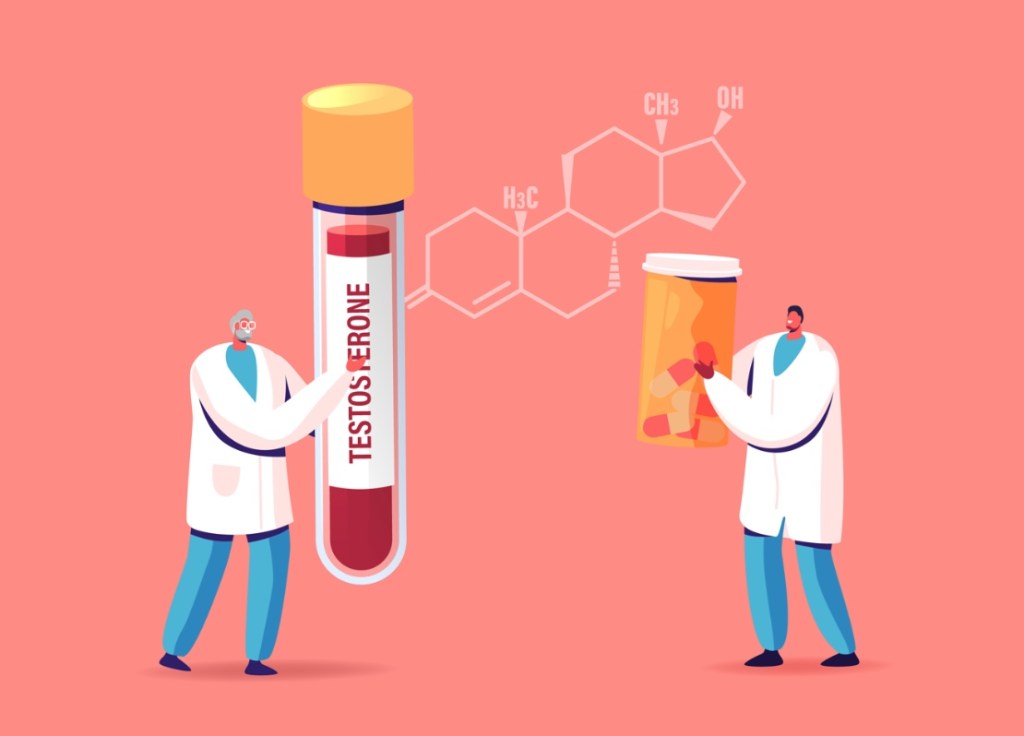
Testosterone is often spoken about as if it acts alone. A single number is assumed to explain a man’s mood, energy, libido, and fertility. We test it, optimise it, worry when it’s “low” and celebrate it when it’s “high”, all while quietly ignoring the network of signals that make testosterone work at all.
If testosterone is the king of male hormones, I think it’s time we looked at the rest of the court.
Testosterone has become shorthand for men’s health. Strength, libido, confidence, muscle mass, and fertility are all linked to it, so it’s easy to see why it dominates the conversation. But also, clinically, testosterone does matters as it supports sperm production, bone density, red blood cell formation, metabolism, and even mood and cognition. But treating testosterone as a standalone explanation flattens the beautifully complex biology. Hormones don’t act in isolation, and testosterone is no exception.
Imagine testosterone as the king of a sprawling endocrine kingdom… powerful, visible, and celebrated. But no king rules alone. Every kingdom needs a court with advisors, messengers, ministers, and overlooked heroes who keep the system functioning.
Introducing luteinising hormone (LH), the royal messenger. LH tells the testes when to produce testosterone, keeping the king’s power in check. Without this signal, testosterone’s effects are muted or misdirected. Next is oestrogen, often forgotten in men’s health but it quietly regulates bone health, libido, and even feeds back to testosterone itself to keep the system balanced. Too much or too little and the kingdom certainly feels it. Now for the other ministers and advisors. Cortisol, the stress minister, can suppress testosterone production and shift energy when the kingdom is under chronic strain. Insulin, the metabolic advisor, and thyroid hormones, the growth and energy ministers, influence how testosterone is produced, converted, and experienced in the body.
Together, they form a wonderfully complex network. So, although testosterone may be king, without this court the kingdom wouldn’t function.
When men’s health is reduced to a single hormone, symptoms get oversimplified. Fatigue, low mood, reduced libido, or fertility concerns are often framed as a simple case of low testosterone, when the underlying issue may sit elsewhere in the court. This signifies a wider problem in reproductive health: complexity is inconvenient, so we replace it with numbers, labels, and shortcuts. And shortcuts rarely lead to good care.
How we talk about testosterone influences overall care. When it’s framed as the defining marker of masculinity and health, men feel pressure to optimise rather than understand. They may worry something is “wrong” without being given the tools to ask better questions about what’s really happening in their bodies. Better conversations don’t mean abandoning testosterone testing, they mean placing it in the appropriate context as one part of a dynamic, responsive system rather than a simple verdict on health.
If we want to take men’s reproductive health seriously, we need to stop crowning one hormone and ignoring the rest. Health isn’t ruled by kings, it’s shaped by systems, signals, and balance. At REPROVA, that’s the conversation we care about, one that respects complexity, prioritises understanding, and treats reproductive health with the medical weight it deserves.
REPROVA.





Leave a Reply