The start of this year has been so windy and rainy, but now that spring has officially sprung, the sun has come out, and suddenly all my seasonal blues have vanished. Everyone’s smiling, jackets are off, and we’re filled with this newfound energy – the power of weather over 10°C.
Interestingly, this response may not be something we simply learn over time. Just as we feel better in the summer, sperm may be happiest in the summer months too! This raises a curious question, can male fertility really change with the seasons?
In a recent study performed by researchers across the UK, Denmark, and Canada (Lassen et al., 2026), semen samples from 15,581 men in Denmark and Florida, all aged between 18 and 45, were collected and analysed for seasonal changes in sperm motility.
The researchers found the same pattern of seasonal variation in the highest quality sperm in June and July, where sperm motility – the ability of sperm to swim effectively – was consistently highest for both parts of the world (Lassen et al., 2026). This suggests that seasonality affects male fertility more than temperature alone.
Understanding seasonal patterns could help clinics optimise the timing of fertility treatment and testing to provide better guidance to couples trying to conceive. This is supported by the study, which suggests that sperm’s motility levels stay consistent across different climates, changing with the seasons. Interestingly, despite Florida having a warmer climate throughout the year, sperm motility levels were still consistently lowest in December and January (Lassen et al., 2026).
However, scientists found no changes in the total sperm concentration – the amount of sperm in someone’s semen – or the ejaculate volume – how much semen is ejected during ejaculation – no matter the season (Lassen et al., 2026). Therefore, while sperm motility does change by season, the time of year doesn’t impact the number of sperm produced. Hence, these findings suggest that seasonal patterns may affect male fertility more than just temperature differences alone.
“We were struck by how similar the seasonal pattern was in two completely different climates… Even in Florida, where temperatures stay warm, sperm motility still peaked in summer and dipped in winter, which tells us that ambient temperature alone is unlikely to explain these changes.”
He added: “Our study highlights the importance of considering seasonality when evaluating semen quality. It also shows that seasonal variation in sperm motility occurs even in warm climates. These findings deepen our understanding of male reproductive health and may help improve fertility outcomes.”
– Professor Allan Pacey, Co-author, The University of Manchester
When we talk about “better” or “higher quality” sperm, scientists are usually referring to three key things: count, motility, and morphology.
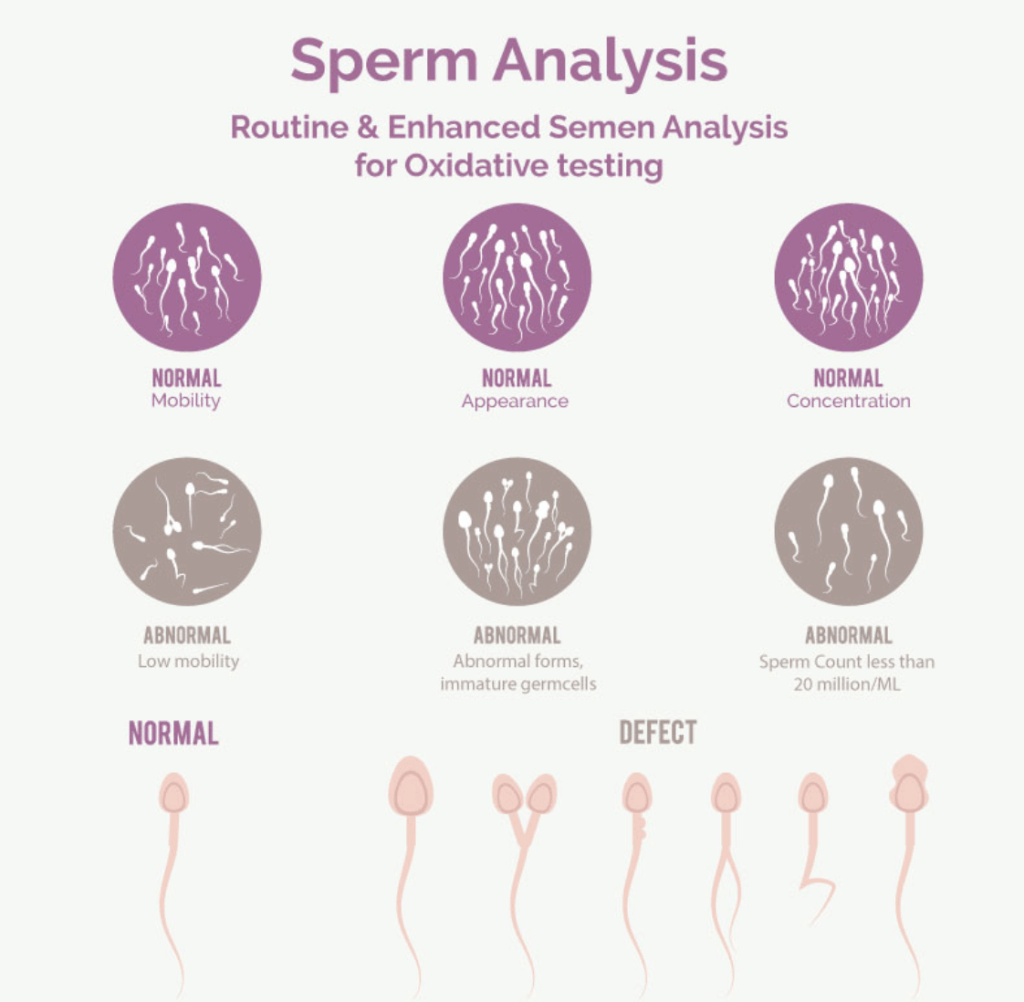
Sperm count is simply how many sperm are present in a sample of semen (Sunder & Leslie et al., 2026). On average, this can range from around 15 million sperm per millilitre to over 200 million (Chertoff, 2018). Counts below this range may make conception more difficult, but it’s important to remember that sperm count alone doesn’t determine fertility.
Motility refers to how well sperm can swim (NCBI, n.d.). This is particularly important, as sperm need to travel through the reproductive tract to reach and fertilise an egg. Even with a normal sperm count, low motility can reduce the chances of conception .
Morphology describes the shape and structure of sperm (Wyns et al., 2024). Sperm with a typical shape are more likely to function effectively, although variations are common and don’t always mean infertility.
Altogether, these factors give a more complete picture of male fertility, which is why studies like this often focus on motility as a key indicator of sperm “performance”.
So, why would sperm motility peak in the summer months? There isn’t one clear answer, but scientists do have a few theories.
- Longer daylight hours may play a role, as increased sunlight can influence hormone levels, including testosterone, and is also linked to higher vitamin D levels, both of which may impact reproductive health (Gaml-Sørensen et al., 2026).
- Temperature is another factor, as the testes function best at slightly cooler temperatures than the rest of the body. While extreme heat can negatively affect sperm production, the seasonal pattern seen in this study suggests that temperature alone doesn’t fully explain the changes (Lassen et al., 2026).
- Lifestyle shifts may also contribute, as during the summer, people often spend more time outdoors, are more physically active, and may experience improvements in mood and overall wellbeing. Additionally, sleep patterns and circadian rhythms can also shift with longer daylight hours, potentially influencing hormone regulation (Lassen et al., 2026).
Most importantly, these are all associations, not definitive causes. The exact reason behind seasonal variation in sperm quality is still being explored!
While the idea of “summer sperm” is interesting, fertility doesn’t suddenly improve just because the weather does. There is significant individual variation, and many other factors that have a much greater impact on male fertility including age, underlying health conditions, smoking, alcohol consumption, and body weight (Babakhanzadeh et al., 2020).
In fact, some studies have found different or less consistent seasonal patterns, suggesting that the relationship between seasons and sperm quality is complex. So, while seasonality may play a role, it’s just one small part of a generally much bigger picture.
For most people, this isn’t something to act on or definitively rely on. It doesn’t mean that couples should try to “time” conception around the summer months, or that fertility is significantly reduced at other times of the year.
That being said, these findings are still useful because they help researchers better understand how environmental and lifestyle factors influence reproductive health and could potentially inform how fertility testing and treatment are approached in the future. It also reinforces the idea that reproductive health is influenced by a combination of biological, environmental, and lifestyle factors.
Our bodies are constantly responding to the world around us. From sleep patterns to hormone levels, many biological processes fluctuate over time and reproductive health is no exception. Hence, studies like this highlight that fertility isn’t fixed and that it can change, adapt, and respond to both internal and external factors. Understanding these patterns is an important step towards better awareness of our bodies and how they function.
Maybe… but it’s certainly not the full story.
While the study suggests that sperm motility may peak in the summer months, fertility is influenced by a wide range of factors that extend far beyond the seasons. What it does show, however, is just how dynamic reproductive health is, and how much we are still learning about it. Next time, we’ll be unpacking the misinformed idea of “bikini medicine” and why female reproductive health extends far beyond what’s often reduced to the “bikini area”.
REPROVA.
Babakhanzadeh, E. et al. (2020) “Some of the factors involved in male infertility: A prospective review,” International Journal of General Medicine, 13, pp. 29–41. Available at: https://doi.org/10.2147/IJGM.S241099.
Chertoff, J. (2018) Normal sperm count: Understanding your semen analysis, Healthline. Healthline Media. Available at: https://www.healthline.com/health/mens-health/normal-sperm-count (Accessed: March 24, 2026).
Gaml-Sørensen, A. et al. (2026) “Vitamin D levels and biomarkers of male fecundity: A study from the Danish National Birth Cohort,” Andrology, 14(3), pp. 847–862. Available at: https://doi.org/10.1111/andr.70061.
Lassen, E. et al. (2026) “Seasonal trends in sperm quality in Denmark and Florida,” Reproductive Biology and Endocrinology: RB&E [Preprint]. Available at: https://doi.org/10.1186/s12958-026-01537-w.
Sperm motility – MeSH – NCBI (no date) Nih.gov. Available at: https://www.ncbi.nlm.nih.gov/mesh?Db=mesh&Cmd=DetailsSearch&Term=%22Sperm+Motility%22%5BMeSH+Terms%5D (Accessed: March 25, 2026).
Sunder, M. and Leslie, S.W. (2026) “Semen analysis,” in StatPearls. Treasure Island (FL): StatPearls Publishing. Available at: https://pubmed.ncbi.nlm.nih.gov/33232039/ (Accessed: March 25, 2026).
Wyns, C. et al. (2024) “Sperm morphology value in assisted reproduction: dismantling an enigma and key takeaways for the busy clinician,” Therapeutic Advances in Reproductive Health, 18, p. 26334941241303888. Available at: https://doi.org/10.1177/26334941241303888.



Leave a Reply