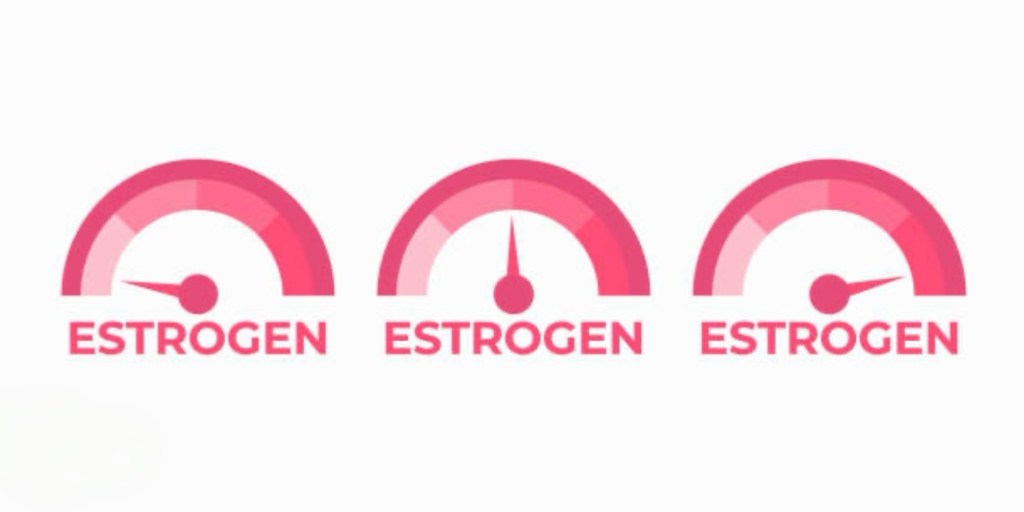
Oestrogen is one of those words that gets thrown around constantly. We blame it for mood swings, credit it for glowing skin, fear it when it’s “too high”, and panic when it drops, all while rarely stopping to ask what it actually does. The science on oestrogen is so rich and nuanced, but the way it’s talked about publicly rarely often reflects that. Somewhere between TikTok hormone hacks, half-remembered GCSE biology, and throwaway comments like “it’s just your hormones”, oestrogen has become more of a caricature rather than a molecule doing seriously complex work.
First things first, oestrogen isn’t one single thing. It’s a group of hormones (mainly oestradiol, oestrone, and oestriol) and each are dominant at different stages of life.
Oestradiol is the one we usually talk about. It’s most active during the reproductive years and drives the menstrual cycle, ovulation, bone health, and many hormone-related symptoms. Oestrone becomes more important after menopause and can be converted into oestradiol when needed. Oestriol is mainly active in pregnancy and supports changes in the uterus and placenta. So, when people talk about oestrogen they’re usually talking about oestradiol, but that shorthand already flattens a much more complex system.
But also, oestrogen receptors are found all over the body: the brain, bones, heart, skin, breasts, uterus, and even immune cells. So that means oestrogen isn’t just about reproduction, it plays a great role in cognition, bone density, cardiovascular health, metabolism, and mood regulation. So, when we talk about it as a “women’s hormone”, we miss how system-wide its effects actually are.
Oestrogen has become a bit of a convenient explanation. Feeling emotional? Must be oestrogen. Headache? Probably oestrogen. Bad skin? High oestrogen. Low energy? Low oestrogen. The problem isn’t that oestrogen doesn’t influence these things, it certainly can, but it’s often treated as the sole culprit rather than one part of a tightly regulated hormonal network. Hormones do not act in isolation and oestrogen interacts constantly with progesterone, testosterone, cortisol, insulin, thyroid hormones… the list goes on.
Blaming oestrogen alone is a bit like blaming one instrument of an orchestra being out of tune.
Online conversations around oestrogen often fall into two categories: oestrogen dominance panic, or fear of oestrogen loss – particularly around menopause. And really both contain fragments of truth, but neither truly captures the full picture. Hormone levels fluctuate naturally across the menstrual cycle and different menstrual stages across life. They also do so in response to stress, illness, nutrition, and sleep. So with that being said, it shows that a number on a blood test without context doesn’t automatically mean something is wrong. What matters far more is timing, balance, symptoms, and individual variation.
The idea that oestrogen should be permanently stable or that there’s a single ideal level just simply doesn’t reflect true human biology.
The research on oestrogen is genuinely rich. We know a lot about receptor subtypes, tissue-specific effects, feedback loops, and how oestrogen signalling changes over time. But public conversations tend to flatten this complexity into absolutes like good vs bad, high vs low, fix vs fail.
Part of this is an education gap, part of it is how science gets filtered through wellness culture and social media, and the other part of it is historical where reproductive biology has long been underfunded, misunderstood, and dismissed as niche or messy. So essentially, when nuance disappears fear fills the gap.
Oestrogen isn’t out to ruin your life, nor is it a magical solution to everything. It’s a hormone doing what hormones do: responding to signals, adapting to context, and changing across time. Understanding oestrogen means accepting fluctuation rather than fearing it as well as asking better questions than “is my oestrogen high or low?”. Instead ask why symptoms might be appearing, when changes are happening, and what else is involved. Better conversations don’t deny complexity, they invite it.
A better conversation about oestrogen would allow for curiosity and uncertainty without panic, take lived experiences seriously while still respecting biological nuance, and stop using hormones as shorthand for personality or behaviour. Essentially, it would treat reproductive health with the medical and social seriousness it deserves, rather than reducing complex systems to throwaway explanations. Oestrogen doesn’t need simplifying, it needs explaining properly, patiently, and without judgement.
Next week, I’ll be circling back to testosterone as promised. Looking at this hormone not as a lone ruler, but as part of a wider hormonal court with quieter players that aid in shaping men’s health in ways we perhaps do not acknowledge.


Leave a Reply