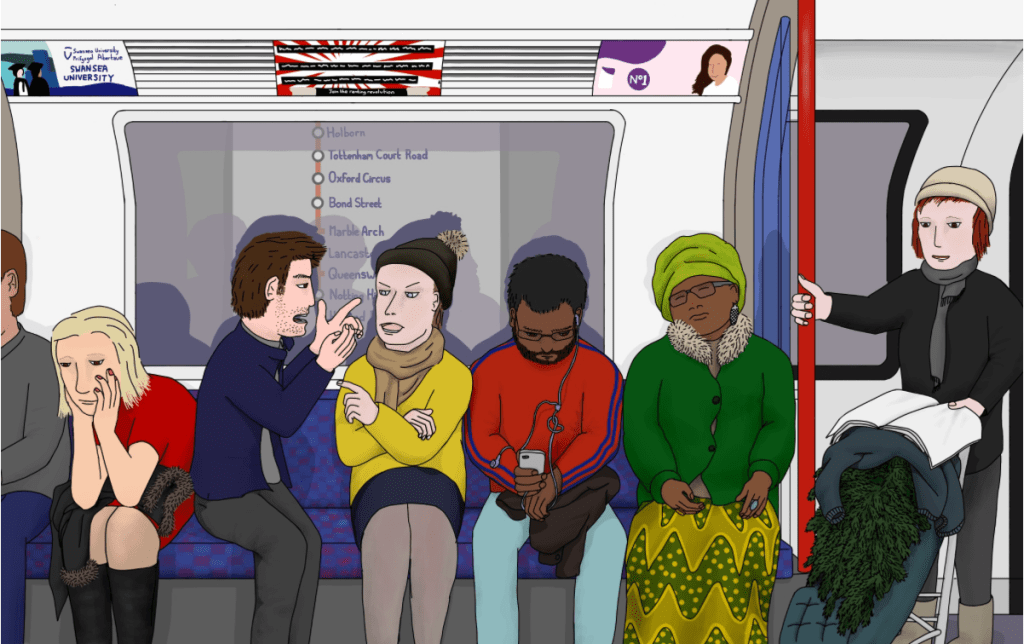
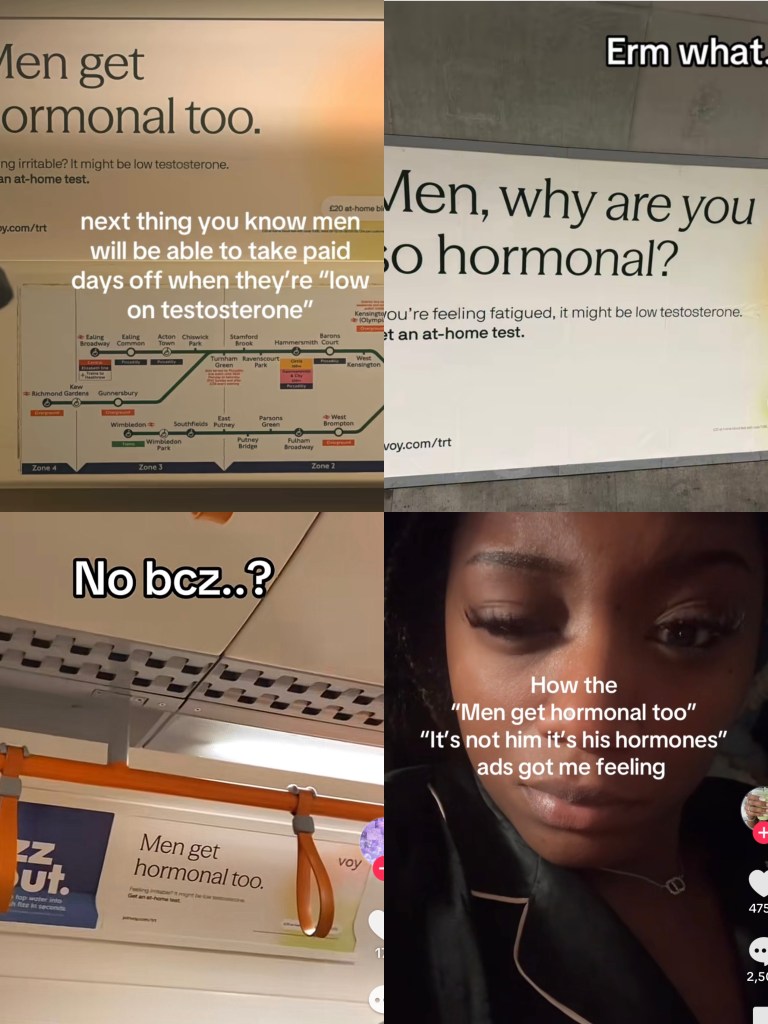
This week on the London Underground, a company’s poster has been catching a lot of attention. Big text. Simple message. “Men get hormonal, too.”. Below it, is a suggestion that irritability might be linked to low testosterone, and an invitation to test it at home.
What followed was not quiet agreement, but outrage. TikToks flooded in with women sharing stories of years spent fighting to have endometriosis or PCOS taken seriously. Comments about pain, dismissal, and the exhaustion of seeing male hormonal health advertised so boldly when female reproductive conditions still struggle for recognition.
But I’ll be honest. I didn’t immediately feel angry. Not because the frustration isn’t real, because it certainly is. But because I think this moment reveals something more complicated, and more interesting, about how we talk about hormones at all.
Testosterone has a reputation. It’s framed as the defining male hormone, the driver of strength, libido, mood, muscle, energy. In many ways, it’s treated like the king of the endocrine system. Powerful. Central. Worth testing, tracking, and optimising. And yes, testosterone matters. It plays a crucial role in sperm production, bone density, red blood cell formation, metabolism, mood, and overall health. Low levels can have real, life-affecting consequences.
But no king rules alone.
What often gets lost is that testosterone doesn’t act in isolation. Its effects depend on a whole supporting network of hormones that work in balance. Luteinising hormone signals the testes to produce testosterone and follicle-stimulating hormone supports sperm development. Oestrogen, present in all men, helps regulate bone health, libido, and even feedback control of testosterone itself. Cortisol, insulin, thyroid hormones all influence how testosterone is produced, used, and felt.
So, when we reduce male reproductive health to a single hormone, we flatten the biology and turn a complex system kind of into a slogan. And ironically, I think that this is where men’s and women’s reproductive health start to look less different than we think.
I understand why many women felt frustrated by that poster. Women’s reproductive health is talked about far more often, but it is also frequently trivialised. Period pain is “normal” and hormonal symptoms are “part of being a woman”. Conditions like endometriosis and PCOS take years to diagnose, and that’s if they’re taken seriously at all.
So, seeing male hormonal care advertised clearly, confidently, and without apology can feel unfair. Like yet another example of whose pain gets medical language and whose gets minimised. But I don’t think the real problem is that men’s hormones are being talked about. I think it’s how unevenly we talk about hormones across the board.
Men’s reproductive health has historically been under-discussed. Many men don’t realise hormones affect their mood, energy, fertility, or long-term health until something feels wrong. Women’s reproductive health, on the other hand, is constantly referenced, but often stripped of its medical seriousness through language that normalises suffering. So really, we end up with two problems existing at once.
One is invisible. The other is visible but dismissed.
And moments like this Tube campaign really do bring that tension to the surface.
“Men get hormonal too” isn’t wrong, but phrasing does shape reaction. When one group’s pain has long been minimised, visibility elsewhere can feel like erasure rather than progress.
But that doesn’t mean we should stop talking about testosterone. It means we need to talk about all reproductive hormones with the same curiosity, respect, and medical weight. We just must also recognise that hormones aren’t a competition, and better care for one group doesn’t have to come at the expense of another.
Playing into the metaphor, if testosterone is the king of male hormones, it’s time we start paying attention to the rest of the court. The signals, the balances, the quiet players that shape men’s health in ways we rarely acknowledge. I will be circling back to look more closely at this idea in future blogs.
Next week’s blog I will be turning to oestrogen. The hormone we talk about endlessly, yet rarely with accuracy, curiosity, or medical seriousness.
REPROVA.


Leave a Reply