Before anything else, Happy New Year!
And slightly less happily, I got my period on the second day of the year…
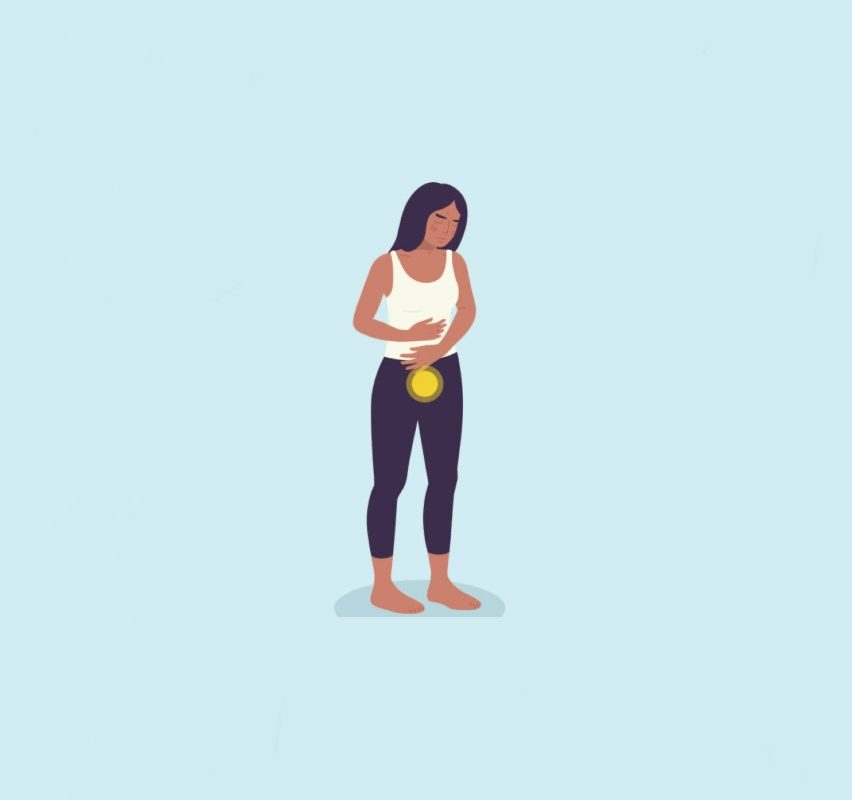
Great timing. Trying to put the fresh plans for the new year into action. The quiet pressure to be productive again. And yet, there I was, doubled over in pain, trying to carry on because, well… it’s just a period. An inconvenience. Something you’re meant to push through.
That phrase, “just a period”, is one we hear early and often. At school. At work. It sounds harmless, even reassuring. Entering the new year, I’ve started to wonder whether we really know what it actually does. Because when pain is brushed off as “just a period”, it stops being something worth questioning. And once we stop questioning it, we stop trying to understand it.
So, let’s do something simple. Let’s take the word period away for a moment and look at what’s actually happening…
A period isn’t just bleeding. It’s a complex biological process driven by hormonal withdrawal, inflammation, and intense muscle activity. When progesterone levels fall, the uterus releases chemicals called prostaglandins. These trigger strong uterine contractions and cause blood vessels supplying the uterine lining to constrict. Therefore, blood flow drops, oxygen supply falls, and tissue breaks down and sheds.
That temporary reduction in blood and oxygen supply is called ischemia.
In most parts of the body, ischemia immediately sounds serious. It’s associated with pain, injury, and medical urgency. But when it happens in the uterus, we soften the language. We call it a period. And somehow, the severity disappears with the word.
Now I think this is where things get interesting, because medicine doesn’t have a neat answer here.
Some people produce higher levels of prostaglandins, leading to stronger contractions and more pain. Others have heightened nerve sensitivity or differences in how pain signals are processed. Some have underlying conditions like endometriosis or adenomyosis. And for many, severe pain exists without anything obviously “wrong” showing up on scans.
Pain intensity doesn’t reliably match how much someone bleeds, how “normal” their uterus looks, or how well they appear to be coping. Which raises an important point: variability doesn’t mean exaggeration, it means biology is messy, individual, and still not fully understood.
It’s important to note that period pain doesn’t always stay confined to the pelvis. Prostaglandins can affect the gut, triggering nausea, diarrhoea, or vomiting. They can influence blood pressure and circulation, which helps explain dizziness and fainting. When someone is throwing up from period pain, that isn’t weakness or drama. It’s a systemic response to inflammation and ischemia.
Again, if this were happening in another organ, it would likely raise concern. But when it’s menstrual, it’s often normalised.
For most people, management is fairly limited. Painkillers that reduce prostaglandins, hormonal contraception to suppress cycles, heat, rest, and lifestyle advice. All of these things can help, sometimes significantly, but they’re largely about symptom control.
I think that what’s often missing is curiosity concerning individual menstrual cycles, especially as now in medicine we are seeing a shift towards personalised precision medicine. Why is this pain so severe? Why does it worsen over time? Why does it stop some people from functioning while others barely notice it? When the starting assumption is that pain is expected, investigation tends to come late, if at all.
The more I think about it, the more it feels like the word period has lost its medical weight. It’s become shorthand for inconvenience rather than a signal of real physiological stress. And that shift matters, because language influences how pain is treated, tolerated, and dismissed. If we described menstrual pain without the word period, but instead as repeated cycles of inflammation, ischemia, and tissue breakdown, would it be taken more seriously? Because pain isn’t less real just because it’s common, and something being expected doesn’t mean it should be ignored.
And maybe this isn’t just a problem with periods, maybe it’s a wider issue in how we talk about reproductive biology altogether. Certain words get softened, complexity gets stripped away, and whole systems become easier to ignore. Men’s reproductive health often gets reduced to one hormone: testosterone. But it isn’t the only one that matters. In my next post, I want to look at what testosterone actually does, what it doesn’t, and which other hormones quietly shape male reproductive health in the background.
REPROVA.


Leave a Reply