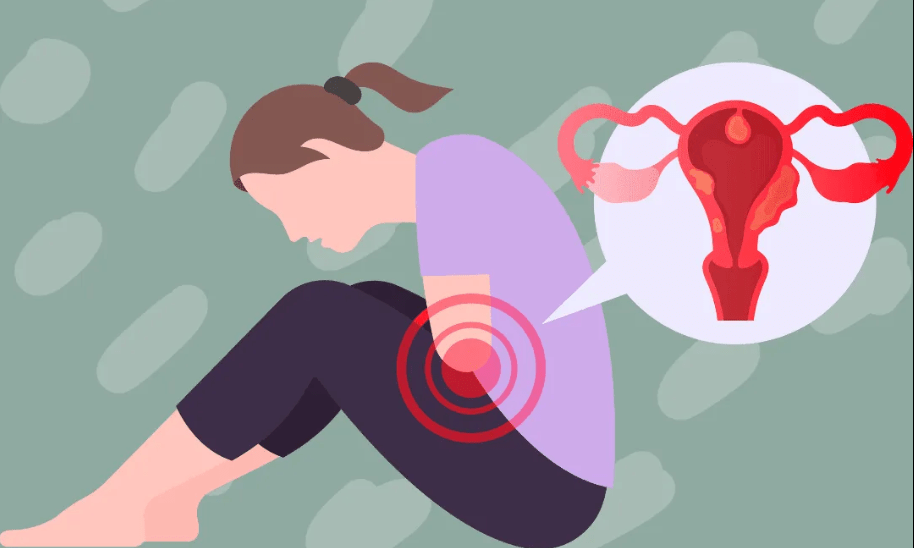
So… why doesn’t endometriosis have a screening test? If you read last week’s post about prostate cancer screening, you might have found yourself wondering: if screening is so difficult, why doesn’t endometriosis have one at all? The simple answer is: there is no screening test for endometriosis.
Not in the UK. Not in Australia. Not anywhere.
And when a condition affects around one in ten women, that absence matters.
Endometriosis is often described as tissue similar to the lining of the uterus growing outside it. But that definition barely scratches the surface. The condition can involve the ovaries, bowel, bladder, pelvic lining, and sometimes areas far beyond the pelvis. It’s driven by hormones, particularly oestrogen, and for many people it causes severe pain, fatigue, and fertility problems.
What makes endometriosis especially difficult to deal with is how differently it shows up in different bodies. Some people have extensive disease and very little pain. Others have minimal visible disease and pain that dominates their daily life. That unpredictability is part of why it’s so hard to detect early.
Screening isn’t just about diagnosis, it’s about finding disease early, often before symptoms become severe. For that to work, a test needs to be safe, affordable, accurate, and suitable for large numbers of people. At the moment, endometriosis doesn’t have a test that meets those criteria.
Researchers have spent years looking for blood markers or hormonal signatures that could flag endometriosis early. So far, none have proven reliable enough. Ultrasound can sometimes detect more advanced forms of endometriosis, but it frequently misses early disease. MRI can help in specialist settings, but it’s expensive and still not sensitive enough to be used for population screening. The only definitive diagnosis is still surgery, and that simply isn’t realistic as a screening tool.
The result of all this is delay. On average, it takes seven to ten years for someone to receive a diagnosis of endometriosis. Not because people aren’t seeking help, but because symptoms are often normalised, dismissed, or treated in isolation without anyone stepping back to ask whether there might be an underlying cause. In the absence of screening, early recognition becomes everything, and right now, the system doesn’t do that well enough.
A recent international review by Rosenbloom et al., 2025, looked at symptom-based screening tools designed to help identify endometriosis earlier in clinical settings. Most of these tools were not well validated enough to rely on, but one stood out. A questionnaire called ENDOPAIN-4D performed better than the others, focusing not just on how severe pain is, but how much it affects everyday life. The authors suggested that it could realistically be used in primary care to help identify people who need further investigation sooner.
There is also early work using machine learning models that combine symptoms with clinical information. These approaches are still very early and not ready for widespread use, but they show where things could be heading. What stands out is that really, we are not completely stuck. We already have tools with potential. They just have not been prioritised or implemented at scale.
Well, I think it probably wouldn’t be a single blood test or scan. A more realistic approach would treat screening as a process rather than a product. That means recognising symptom patterns earlier, taking severe or persistent period pain seriously, and having clearer pathways for investigation and referral. It also means investing properly in research, not just into treatments, but into understanding how to detect the disease sooner.
PSA testing for prostate cancer isn’t perfect, yet the UK is investing millions into trials like TRANSFORM to improve screening using risk-based approaches. Endometriosis affects a similar proportion of the population, but it hasn’t been met with the same urgency, funding, or innovation.
And to be honest that contrast is hard to ignore.
If we accept years-long diagnostic delays for endometriosis, what message does that send about whose pain we prioritise? And if we’re willing to redesign screening systems for men’s health, what would it look like if we took endometriosis just as seriously?
If we don’t screen for endometriosis, it makes me wonder what else we might be missing. Next week, we’ll talk about another reproductive issue hiding in plain sight: male fertility.
REPROVA.


 REPROVA
Leave a comment